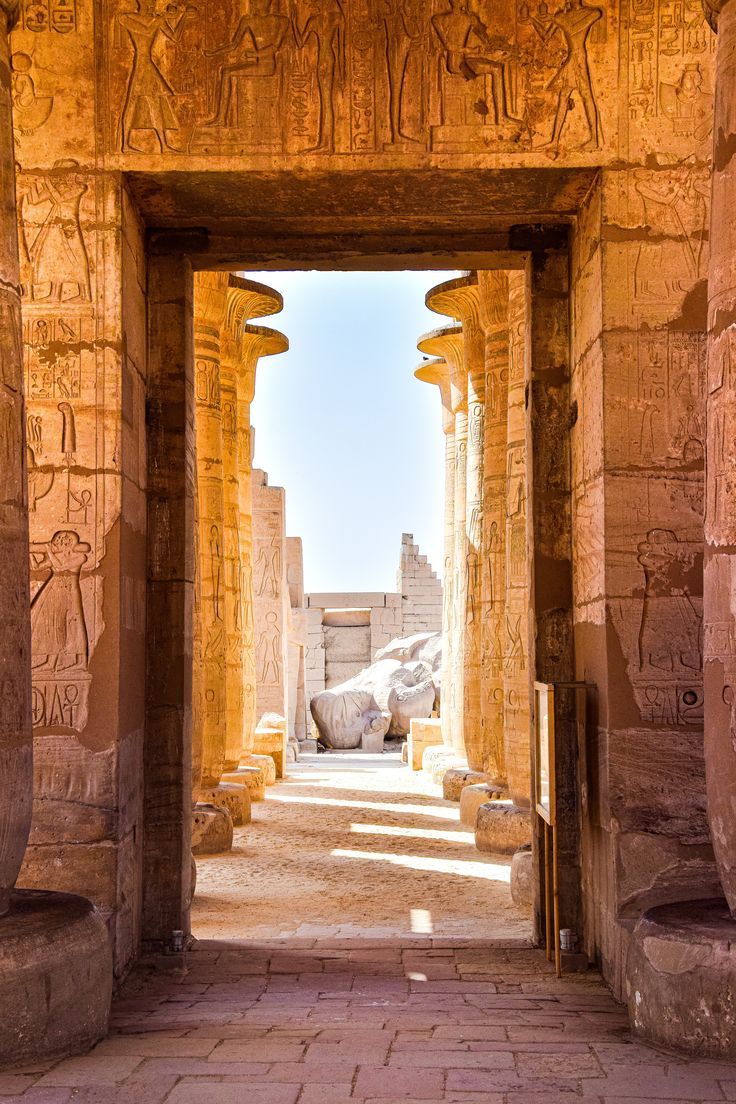
Karnak Temple is one of the most impressive archaeological sites in Egypt and one of the greatest religious complexes ever built. Located on the eastern bank of the Nile in Luxor, Karnak is a vast collection of temples, chapels, pylons, obelisks, statues, and sacred spaces that were developed over more than 2,000 years.
Unlike many ancient monuments that were constructed by a single ruler, Karnak was expanded by generations of pharaohs. Each ruler added new structures, monuments, and decorations, creating an extraordinary architectural complex that reflects the changing history of Ancient Egypt.
Today, Karnak Temple is one of the most important places to visit in Luxor and an essential stop for travelers exploring the ancient wonders of Egypt.
What Is Karnak Temple?
Karnak is not a single temple but a huge religious complex containing several temples and sacred structures.
The ancient Egyptians knew the main sanctuary as Ipet-Sut, meaning “The Most Select of Places.”
The complex was primarily dedicated to Amun-Ra, one of the most important gods in the Egyptian pantheon, although other deities were also worshipped at Karnak.
The site developed over many centuries, with major contributions from pharaohs including:
- Senusret I
- Hatshepsut
- Thutmose III
- Seti I
- Ramses II
- Ramses III
Their contributions transformed Karnak into one of the largest religious centers in the ancient world.
Where Is Karnak Temple?
Karnak Temple is located in Luxor on the eastern bank of the Nile River.
Its position within ancient Thebes was highly significant.
While the West Bank became associated with royal tombs and funerary monuments, the East Bank was primarily connected with temples and religious life.
Karnak and Luxor Temple were connected by the famous Avenue of Sphinxes, creating a ceremonial route used during major religious festivals.
The Great Temple of Amun-Ra
The central and most important part of Karnak is the Great Temple of Amun-Ra.
Amun was originally a local god of Thebes. As Thebes grew in political importance, Amun became increasingly powerful and was eventually associated with the sun god Ra.
The combined deity Amun-Ra became one of the most important gods in Ancient Egypt.
The enormous scale of the temple reflects the religious and political importance of the god.
The Great Hypostyle Hall
One of the most spectacular areas of Karnak is the Great Hypostyle Hall.
The hall contains 134 massive columns arranged in rows.
The largest columns rise approximately 21 meters high, creating a breathtaking forest of stone.
The central columns are taller than those along the sides, allowing light to enter through clerestory windows.
The walls and columns are covered with hieroglyphic inscriptions and detailed reliefs depicting pharaohs, gods, religious ceremonies, and military victories.
Standing inside the Great Hypostyle Hall provides a powerful impression of the architectural ambition of Ancient Egypt.
The Obelisks of Karnak
Karnak contains several impressive obelisks, including the famous obelisk erected by Queen Hatshepsut.
Carved from a single block of granite, the obelisk demonstrates the extraordinary skill of ancient Egyptian stoneworkers.
Hatshepsut’s obelisk originally stood as part of a pair and was decorated with inscriptions celebrating her reign and relationship with the gods.
The surviving monument remains one of the most recognizable features of Karnak.
Queen Hatshepsut at Karnak
Queen Hatshepsut was one of the most successful rulers in Egyptian history, and her presence at Karnak is particularly significant.
She commissioned several monuments within the complex, including her famous obelisks.
Her reign was marked by major construction projects, successful trade expeditions, and a period of relative prosperity.
The monuments she left behind at Karnak demonstrate her determination to establish her legitimacy as pharaoh and strengthen her connection with the gods.
Thutmose III and the Festival Hall
Pharaoh Thutmose III expanded Karnak significantly.
One of his most interesting contributions is the Festival Hall, sometimes called the Akh-Menou.
The structure was associated with the king’s religious celebrations and the renewal of his royal power.
Its unique architectural design differs from other parts of Karnak and demonstrates how the complex changed over time.
Thutmose III was also one of Ancient Egypt’s greatest military leaders, and inscriptions at Karnak record many of his achievements.
The Sacred Lake
Another important feature of Karnak is the Sacred Lake.
The lake was used by priests for ritual purposes and formed an essential part of the temple’s religious environment.
Priests purified themselves in the sacred water before performing ceremonies.
The lake also had symbolic importance, representing the primordial waters from which the ancient Egyptians believed creation emerged.
Today, the Sacred Lake provides a peaceful contrast to the monumental structures surrounding it.
The Avenue of Sphinxes
Karnak was connected with Luxor Temple by a ceremonial avenue lined with sphinx statues.
The avenue once extended for several kilometers and played an important role during religious festivals.
The most important was the Opet Festival, when the sacred images of the gods were carried between Karnak and Luxor Temple.
The procession symbolized renewal, fertility, and the continued divine power of the pharaoh.
Restored sections of the avenue allow modern visitors to imagine the grandeur of these ancient ceremonies.
The Opet Festival
The Opet Festival was one of the most important religious celebrations in ancient Thebes.
During the festival, sacred images associated with Amun, Mut, and Khonsu were transported from Karnak to Luxor Temple.
The journey involved elaborate ceremonies, music, offerings, and large public celebrations.
The festival reinforced the relationship between the gods, the pharaoh, and the people.
It also symbolized the renewal of royal power and the continuation of cosmic order.
The Temple of Khonsu
Karnak also contains the Temple of Khonsu, dedicated to the moon god Khonsu.
Khonsu was part of the Theban divine family together with Amun and the goddess Mut.
The temple is one of the best-preserved structures within the Karnak complex and provides valuable examples of New Kingdom architecture and religious decoration.
The Temple of Mut
Another important section of the complex is associated with the goddess Mut, the wife of Amun and mother of Khonsu in the Theban religious tradition.
The area includes temples, statues, and sacred spaces dedicated to the goddess.
Although parts of the precinct have suffered damage over time, archaeological work continues to reveal more about its historical importance.
Karnak as a Center of Ancient Egyptian Religion
Karnak was far more than a collection of beautiful buildings.
It was a major religious institution with priests, administrators, craftsmen, farmers, and workers supporting its activities.
The temple controlled large amounts of land and resources.
It also received offerings, taxes, and gifts from pharaohs and wealthy individuals.
This made Karnak both a religious center and an important economic institution.
The Relationship Between Karnak and Luxor Temple
Karnak and Luxor Temple were closely connected.
Karnak represented one of the most important sacred centers of ancient Thebes, while Luxor Temple played a major role in royal and religious ceremonies.
The Avenue of Sphinxes linked the two complexes.
Visiting both temples allows travelers to better understand the religious landscape of ancient Luxor.
Karnak Temple at Sunset
Karnak is spectacular throughout the day, but visiting in the late afternoon can provide a particularly memorable experience.
The warm light emphasizes the texture of the stone columns, statues, and hieroglyphic inscriptions.
The changing light also creates excellent opportunities for photography.
Travelers should allow enough time to explore the complex slowly rather than rushing from one monument to another.
Sound and Light Experiences
Karnak has also been associated with evening cultural presentations that use lighting and storytelling to introduce visitors to the history of the temple.
Availability and schedules can change, so travelers should check current arrangements before planning an evening visit.
Best Time to Visit Karnak Temple
The cooler months from October to April are generally the most comfortable for exploring Karnak.
During summer, temperatures can become very high, particularly in the middle of the day.
An early morning visit is an excellent option for travelers who want cooler weather and softer light.
Late afternoon is another good time, particularly for photography.
How Long Do You Need at Karnak?
Visitors should allow at least two to three hours to explore the main areas of Karnak Temple.
History enthusiasts and photographers may want to spend even longer.
The complex is enormous, and rushing through it can mean missing important details.
A professional Egyptologist guide can also help visitors understand the religious symbolism and historical significance of the monuments.
Tips for Visiting Karnak Temple
To make your visit more enjoyable:
- Wear comfortable walking shoes.
- Bring water and sun protection.
- Start early during warmer months.
- Allow several hours for exploration.
- Consider hiring a professional Egyptologist guide.
- Bring a camera to photograph the columns and hieroglyphs.
- Combine Karnak with Luxor Temple for a complete East Bank experience.
Frequently Asked Questions
Why is Karnak Temple famous?
Karnak is famous for its enormous size, monumental architecture, Great Hypostyle Hall, obelisks, statues, and more than two thousand years of religious and architectural development.
Who built Karnak Temple?
Karnak was not built by one pharaoh. Many rulers contributed to its construction and expansion over several centuries.
What god was worshipped at Karnak?
The main temple was dedicated to Amun-Ra, one of the most important gods of Ancient Egypt.
How long does it take to visit Karnak Temple?
Most visitors should allow two to three hours, although a longer visit is recommended for travelers who want to explore the complex in detail.
Is Karnak Temple worth visiting?
Absolutely. Karnak is one of the greatest archaeological attractions in Egypt and one of the most impressive examples of ancient religious architecture.
Conclusion
Karnak Temple represents the extraordinary power, creativity, and religious devotion of Ancient Egypt. Its massive columns, towering obelisks, sacred lake, monumental gateways, and countless inscriptions reveal how generations of pharaohs transformed a sacred site into one of the greatest religious complexes in the ancient world.
Together with Luxor Temple, the Valley of the Kings, and the other monuments of ancient Thebes, Karnak makes Luxor one of the most important archaeological destinations on Earth.
But the journey through southern Egypt does not end in Luxor. Following the Nile south, travelers reach a city known for its beautiful landscapes, Nubian culture, ancient temples, and peaceful atmosphere.
Continue Reading: Aswan Egypt – Exploring the Jewel of the Nile