
Luxor is one of the most remarkable destinations in Egypt and one of the most important archaeological cities in the world. Located on the banks of the Nile River in southern Egypt, Luxor is home to an extraordinary concentration of ancient temples, royal tombs, monuments, and archaeological treasures.
Often described as the world’s greatest open-air museum, Luxor allows travelers to experience thousands of years of Egyptian history in a single destination. From the magnificent Karnak Temple and Luxor Temple on the East Bank to the Valley of the Kings and the Temple of Hatshepsut on the West Bank, every part of the city tells a story about the pharaohs and the civilization they built.
For anyone planning a trip to Egypt, visiting Luxor is an essential experience.
Why Is Luxor So Important?
Modern Luxor was built around the remains of ancient Thebes, one of the most powerful cities of Ancient Egypt.
Thebes became particularly important during the Middle and New Kingdoms, when it served as the political and religious capital of Egypt during several periods.
Powerful pharaohs constructed enormous temples dedicated to the gods, while the western desert became a vast burial ground for kings, queens, nobles, and officials.
Today, these monuments make Luxor one of the world’s most important archaeological destinations.
East Bank and West Bank of Luxor
Luxor’s archaeological attractions are generally divided into two main areas: the East Bank and the West Bank.
The East Bank was associated primarily with temples, religious ceremonies, and daily life.
The West Bank became the main area for royal tombs and funerary monuments.
This division makes exploring Luxor particularly fascinating because visitors can see how the ancient Egyptians separated the world of the living from the world of the dead.
Karnak Temple Complex
One of the greatest attractions in Luxor is the enormous Karnak Temple Complex.
Karnak was not built by a single pharaoh. Instead, generations of Egyptian rulers expanded and modified the complex over more than a thousand years.
The site contains:
- Massive temple gateways
- Monumental statues
- Sacred lakes
- Obelisks
- Chapels
- Colossal columns
- Ancient inscriptions
The Great Hypostyle Hall is one of Karnak’s most spectacular features.
Its enormous columns create a forest of stone that demonstrates the extraordinary architectural skills of Ancient Egyptian builders.
Walking between these massive columns gives visitors a powerful impression of the scale and ambition of ancient Egyptian religious architecture.
Luxor Temple
Located in the heart of modern Luxor, Luxor Temple is another magnificent monument on the East Bank.
Unlike Karnak, which developed over many centuries as a huge religious complex, Luxor Temple was designed as a more unified monumental structure.
The temple was closely connected with the ancient Egyptian celebration known as the Opet Festival, during which sacred images of the gods were carried between Karnak and Luxor Temple.
The temple is especially beautiful at sunset and after dark when its ancient columns and statues are illuminated.
The Avenue of Sphinxes
The Avenue of Sphinxes connects the area of Karnak with Luxor Temple.
This ancient ceremonial road once stretched for several kilometers and was lined with sphinx statues.
The avenue played an important role in religious ceremonies, especially during the Opet Festival.
Today, visitors can explore sections of the restored avenue and imagine how grand religious processions once moved through ancient Thebes.
The Valley of the Kings
Across the Nile on Luxor’s West Bank lies one of Egypt’s most famous archaeological sites: the Valley of the Kings.
The valley was used as a royal burial ground during the New Kingdom.
Instead of building enormous pyramids, pharaohs chose to hide their tombs inside the surrounding mountains.
More than sixty tombs have been discovered in the valley, although only some are open to visitors at any given time.
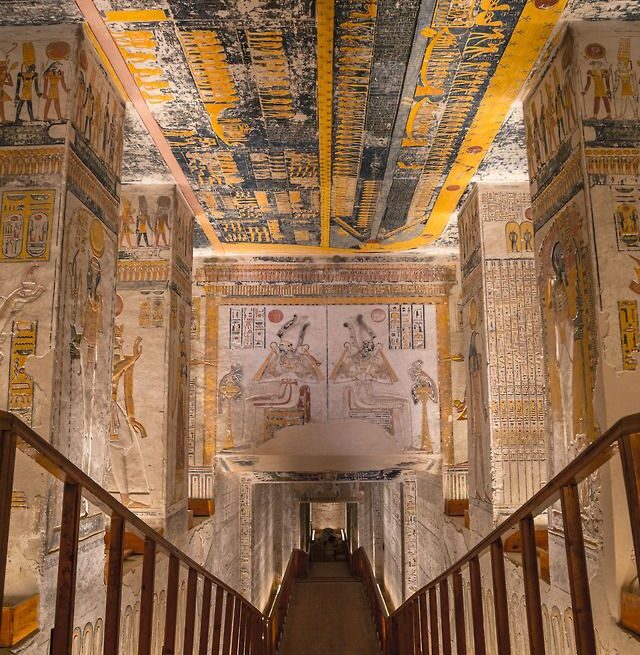
The tombs contain beautifully decorated walls covered with religious texts, scenes, and colorful images depicting the journey of the deceased into the afterlife.
The Tomb of Tutankhamun
The most famous discovery in the Valley of the Kings is the tomb of King Tutankhamun.
Discovered in 1922 by Howard Carter, the tomb attracted worldwide attention because much of its treasure remained remarkably well preserved.
Although Tutankhamun ruled for only a short period, his tomb became one of the most famous archaeological discoveries in history.
Visitors to Luxor can enter the tomb and see the burial chamber and the remains of its ancient decorations.
Many of Tutankhamun’s treasures are now displayed at the Grand Egyptian Museum near the Giza Pyramids.
Temple of Hatshepsut
Another essential attraction on Luxor’s West Bank is the magnificent Temple of Hatshepsut.
Queen Hatshepsut was one of Ancient Egypt’s most remarkable rulers and among the most successful female pharaohs in Egyptian history.
Her temple was built dramatically against the cliffs of Deir el-Bahari.
The monument features:
- Large terraces
- Long ramps
- Colonnades
- Statues
- Religious reliefs
- Scenes depicting trade expeditions
The architecture blends naturally with the surrounding limestone cliffs, creating one of the most spectacular landscapes in Luxor.
Colossi of Memnon
At the entrance to the West Bank stands another famous landmark: the Colossi of Memnon.
These two enormous stone statues once guarded the entrance to a vast mortuary temple associated with Pharaoh Amenhotep III.
Although the original temple has largely disappeared, the colossal statues remain standing and have become one of Luxor’s most recognizable symbols.
They are an easy stop to include when exploring the West Bank.
Medinet Habu
Medinet Habu is one of the best-preserved temple complexes on Luxor’s West Bank.
The temple was built by Pharaoh Ramses III and contains impressive walls covered with detailed reliefs and inscriptions.
Scenes depict battles, religious ceremonies, offerings, and important events from the reign of Ramses III.
Because of its remarkable preservation, Medinet Habu provides visitors with an unusually clear picture of ancient Egyptian temple decoration.
Valley of the Queens
The Valley of the Queens served as a burial place for queens, royal children, and other members of the royal family.
One of the most famous tombs is the tomb of Queen Nefertari, wife of Ramses II.
The tomb is renowned for its incredibly detailed and colorful wall paintings.
The quality of the artwork makes Nefertari’s tomb one of the most impressive ancient Egyptian tombs ever discovered.
Luxor Hot Air Balloon Experience
One of the most memorable ways to experience Luxor is from above.
Hot air balloon flights usually take place around sunrise, offering spectacular views of:
- The Nile River
- Agricultural fields
- Ancient temples
- The Valley of the Kings
- The surrounding desert
- Luxor city
Watching the sun rise over the archaeological landscape is an unforgettable experience and one of the most popular activities in Luxor.
Luxor and the Nile River
The Nile is central to the identity of Luxor.
The river separates the East and West Banks while providing spectacular scenery throughout the city.
Travelers can enjoy traditional felucca rides, private boat trips, or multi-day Nile cruises connecting Luxor with Aswan.
A Nile cruise is one of the most popular ways to explore southern Egypt because it allows travelers to visit several ancient sites while enjoying the scenery and comfort of the river.
How Many Days Do You Need in Luxor?
Ideally, travelers should spend at least two or three days exploring Luxor.
A possible itinerary could include:
Day 1: East Bank
Visit Karnak Temple and Luxor Temple.
Day 2: West Bank
Explore the Valley of the Kings, Temple of Hatshepsut, Colossi of Memnon, and Medinet Habu.
Day 3: Additional Experiences
Visit the Valley of the Queens, explore additional tombs, enjoy a hot air balloon flight, or take a felucca ride on the Nile.
Travelers with limited time can also experience the main highlights of Luxor in one or two days.
Best Time to Visit Luxor
The cooler months from October through April are generally the most comfortable for exploring Luxor’s archaeological sites.
Temperatures can become extremely high during summer, particularly when visiting the West Bank.
For the best experience, start sightseeing early in the morning and take breaks during the hottest part of the day.
Tips for Visiting Luxor
To enjoy your Luxor trip:
- Start archaeological visits early.
- Wear comfortable walking shoes.
- Bring plenty of water.
- Use sunscreen and wear a hat.
- Hire a professional Egyptologist guide.
- Allow enough time to explore the tombs.
- Consider a sunrise hot air balloon flight.
- Combine Luxor with a Nile cruise to Aswan.
Frequently Asked Questions
Why is Luxor called the world’s greatest open-air museum?
Luxor contains an extraordinary concentration of ancient temples, tombs, statues, and archaeological monuments spread throughout the modern city and surrounding desert.
How many days should I spend in Luxor?
Two to three days are ideal for exploring the major attractions without rushing.
What are the most famous attractions in Luxor?
The most famous attractions include Karnak Temple, Luxor Temple, the Valley of the Kings, Temple of Hatshepsut, Colossi of Memnon, and Medinet Habu.
Is Luxor worth visiting?
Absolutely. Luxor is one of the world’s most important archaeological destinations and an essential stop on any Egypt itinerary.
Can I visit Luxor from Cairo?
Yes. Luxor can be reached from Cairo by domestic flight, train, or other transportation options. Many travelers also visit Luxor as part of a Nile cruise itinerary.
Conclusion
Luxor is where the greatness of Ancient Egypt becomes truly visible. From the monumental columns of Karnak Temple to the hidden tombs of the Valley of the Kings, the city offers an extraordinary journey through the history, religion, architecture, and culture of the pharaohs.
Every temple and tomb reveals another part of the story of ancient Thebes, making Luxor one of the most rewarding destinations in Egypt.
But among all the archaeological treasures of Luxor, one site has captured the imagination of travelers more than any other: a mysterious valley hidden among the desert mountains where generations of Egyptian pharaohs were buried.
Continue Reading: Valley of the Kings – Discovering the Tombs of the Pharaohs